How does the nexus between security, human rights and good governance play out in the sustainable development context?
By Luka Glušac, 2023
Within the framework of the SDG 16 project, DCAF hosted the workshop “Ombuds Institutions, SDG 16, and Security Sector Governance: Towards Peaceful, Just, and Inclusive Societies in Sub-Saharan Africa” on 5-6 October 2022, in Oslo, Norway.
2022
The 2022 World Justice Forum brought together rule of law actors from around the world in the Hague and online to discuss pressing issues related to justice.
By Pedro de Castro Souza, 2022
The compendium highlights the importance of human rights in the armed forces to maintain the military’s accountability and embody the democratic commitments of every state.
2021
This is the second of a two-part series of briefing notes, informed by the discussions from the 12th International Conference of Ombuds Institutions for the Armed Forces (ICOAF) held in October 2020.
By Luka Glušac and Ajla Kuduzovic, 2021
This SSR Backgrounder explains what ombuds institutions for the armed forces are, what they do and how they contribute to good governance of the security sector.
2019
This Series of Monitoring Products is designed to facilitate the work of National Human Rights (Ombuds) Institutions on monitoring the security sector.
By Nazli Yildirim Schierkolk, 2017
This publication offers the Key Issues and Policy Recommendations based on the results of the Fifth International Conference “The Role of Ombuds Institutions in Security Sector Governance”.
By DCAF, Razumkov Centre, 2017
Ombuds institutions for the armed forces are key actors in establishing good governance and implementing democratic controls of the security sector.
Editors: William McDermott and Kim Piaget, 2017
This mapping study project on ombuds institutions for the armed forces in francophone countries in sub-Saharan Africa draws on extensive research undertaken as part of a previous OIF-DCAF research project in 2013.
2016
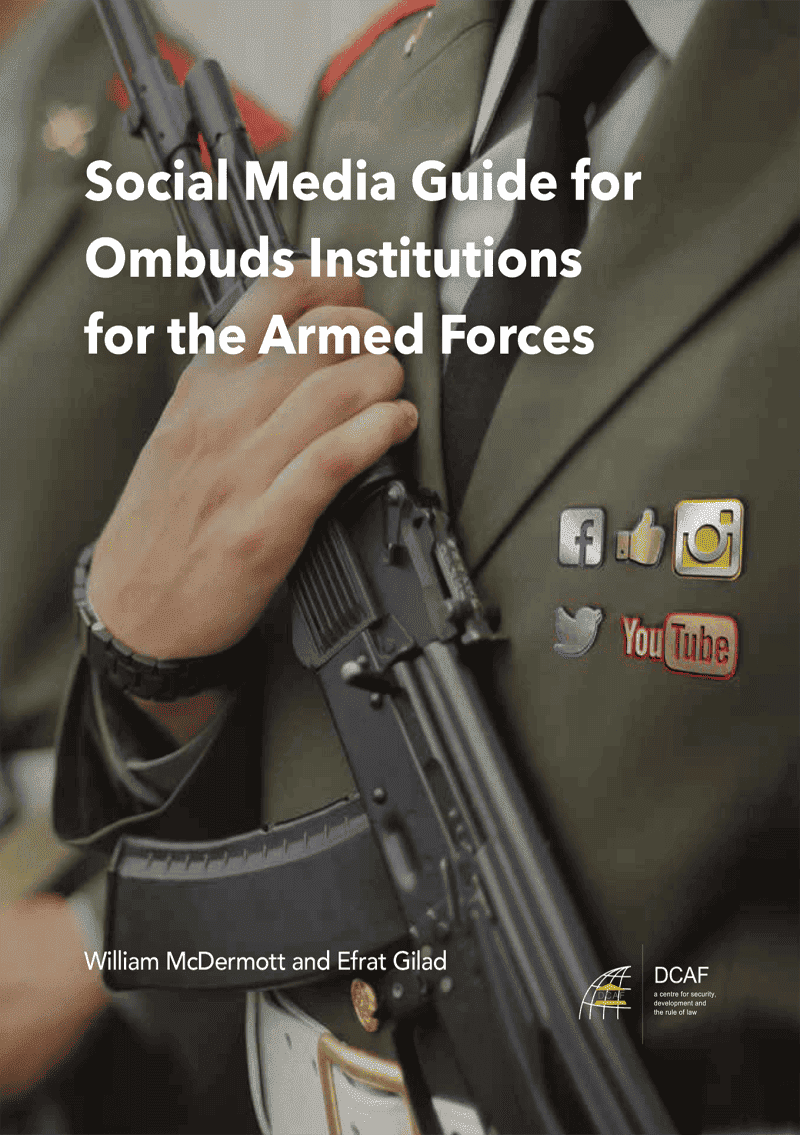
The aim of this guide is to promote and support ombuds institutions in adopting and competently using social media as part of their broader business and communications strategy.
By William McDermott and Efrat Gilad, 2016
This publication has been developed in joint cooperation between DCAF and the OSCE Office for Democratic Institutions and Human Rights (ODIHR) as part of an ongoing research project on ombuds institutions for the armed forces.
By Kim Piaget, Riina Turtio, 2015
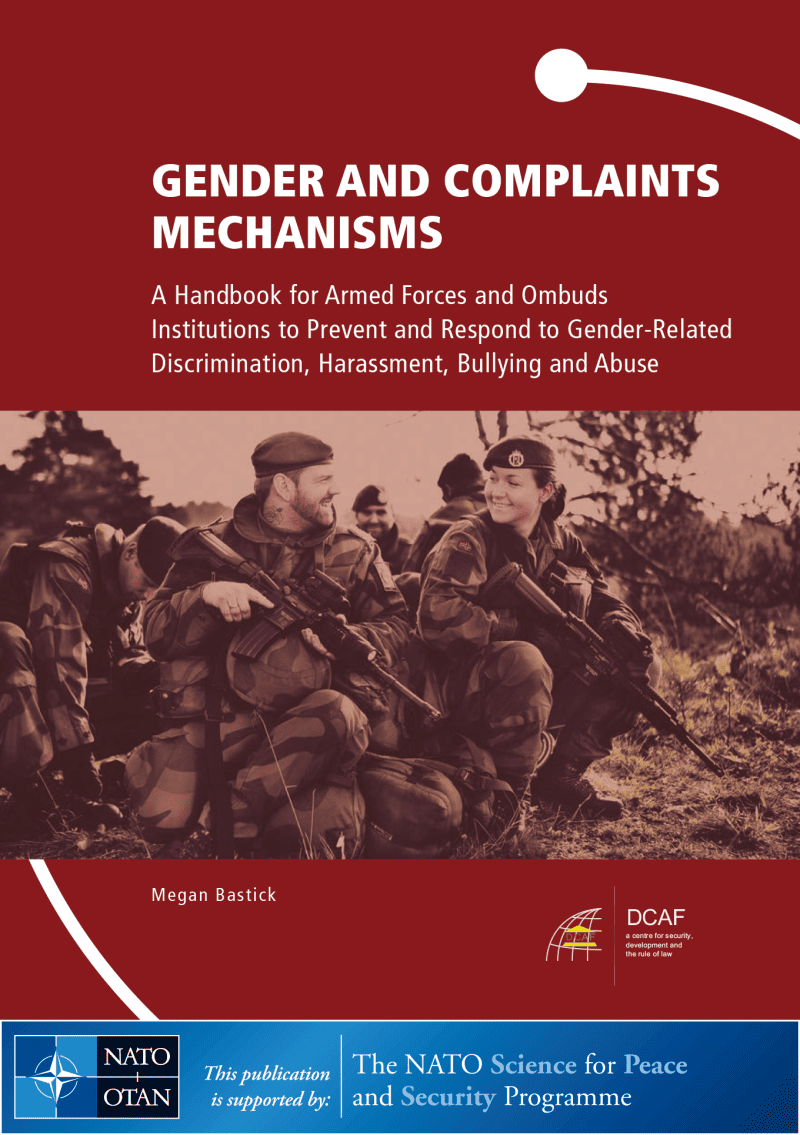
This handbook brings together knowledge and experience as regards prevention of misconduct, and handling and monitoring of complaints within armed forces, with particular regard to gender.
By Megan Bastick, 2015
This guidance note is a practical resource for ombuds institutions and NHRIs, and those who support them.
By Megan Bastick, 2014
DCAF produced a paper on the role of gender in ombuds institutions for the armed forces. It was mandated by the Fifth International Conference of Ombuds Institutions for the Armed Forces.
By Benjamin S. Buckland, 2014
DCAF produced an introduction to the role of capacity development in ombuds institutions for armed forces.
By Hans Born, Benjamin S. Buckland, William McDermott, 2014
Under the aegis of the Organisation Internationale de la Francophonie (OIF), DCAF undertook three case studies in Burkina Faso, Burundi and Senegal each of which were prepared by country experts.
By Jean-Pierre Bayala, Athanase Ndikumana, Dior Fall Sow, 2013
This handbook examines ombuds institutions for the armed forces and their role in the promotion and protection of human rights as well as in the prevention of maladministration.
By Benjamin S. Buckland, William McDermott, 2012
Ombuds institutions, in their many guises, have now been around for two centuries.
By Hans Born, Aidan Wills, Benjamin S. Buckland, 2011
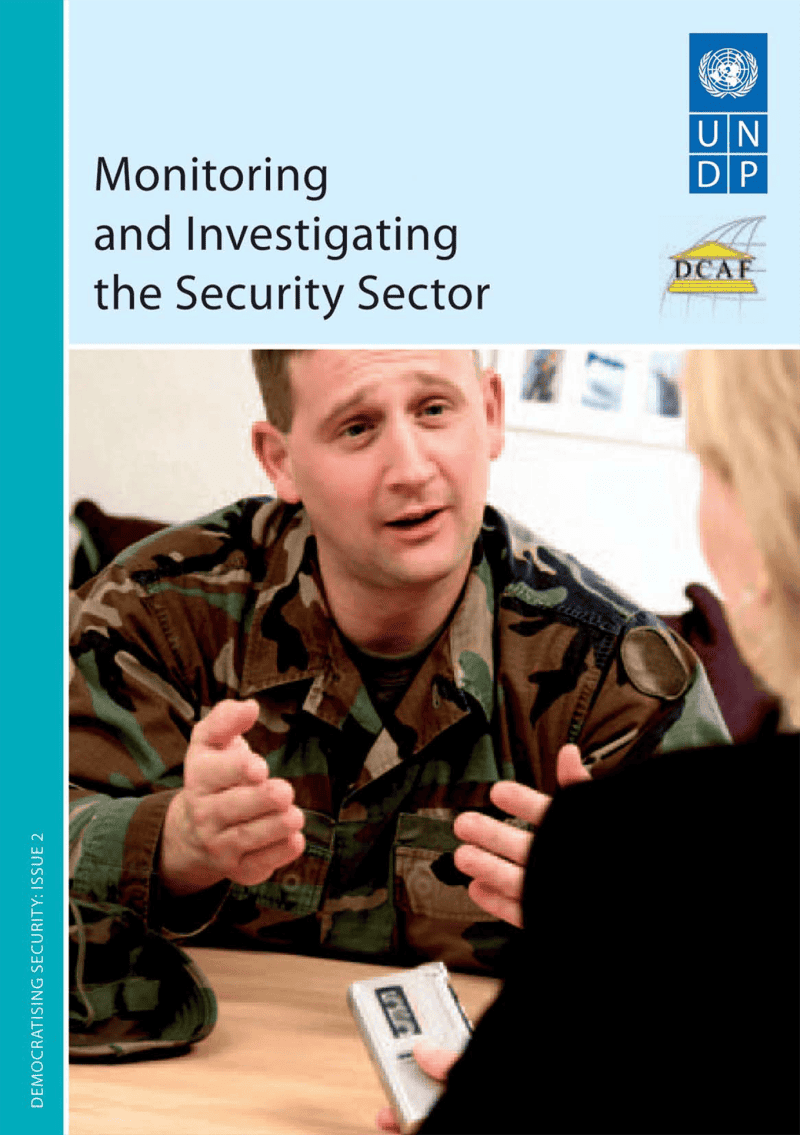
This book focuses on the role of ombuds institutions in monitoring and investigating the security sector.
Editors: Katrin Kinzelbach and Eden Cole, 2007